 Laxmikant Mishra
What Are the Key Steps in Guidewire API Integration
Eduaksi | 2026-09-17 19:57:10
The property and casualty (P&C) insurance market relies largely on technology to process claims, issue policies and collect payments. Insurance firms today cannot afford to be isolated islands. They have to integrate effectively with payment gateways, credit bureaus, automobile database registries and the customer mobile apps. Guidewire is the digital core that drives hundreds of the world's biggest insurers. This core platform needs Guidewire API integration for connection to external software solutions. Understanding how these linkages are made allows insurance providers to modernize their processes, eliminate unnecessary paperwork, and deliver speedier service to policyholders. If you are working in the insurance sector, then learning this tool by joining the Guidewire Course can improve your skills.
What is Guidewire?
Guidewire is an enterprise software platform built exclusively for the Property & Casualty (P&C) insurance industry. It is a single operating engine that powers the whole insurance lifecycle.
The platform is built on three main core apps, together called Guidewire InsuranceSuite:
PolicyCenter: Handle policy formation, underwriting rules and quotation.
ClaimCenter: First Notice of Loss (FNOL), Claim Handling, Investigations and Payments.
BillingCenter: Handles invoicing, payment plans, commissions monitoring and collections.
Guidewire Certification plays an important role if you are looking for a job in Property and casualty insurance.
Features of Guidewire
Learn these features practically by joining the Guidewire Testing Course. 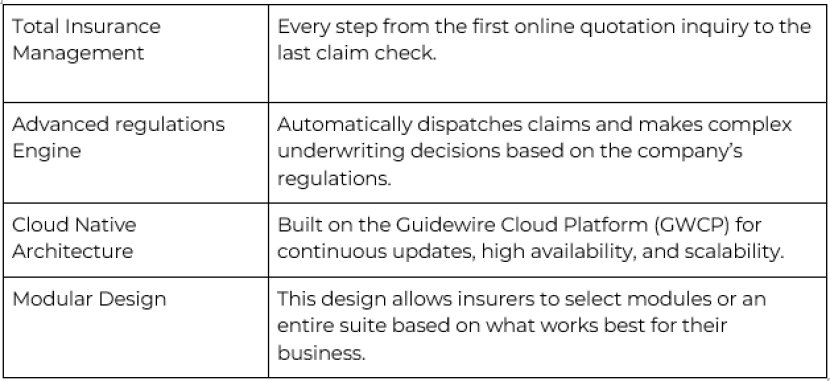
What is Guidewire Integration?
Guidewire Integration is a collection of APIs and toolsets that enable easy integration of other systems with Guidewire InsuranceSuite consisting of PolicyCenter, BillingCenter and ClaimCenter. Whether you’re attempting to connect to external services, other internal applications or cloud platforms, Guidewire’s connection options ensure that data can move rapidly, safely and at scale throughout the insurance landscape.
A Guidewire Functional Online Training is providing basic to advanced learning. Whether you are a fresher or working professional, joining this training means improving your skills.
Critical Steps in the Guidewire API Integration Process
If you are integrating external technologies with Guidewire, you need to have an organized method to ensure that data flows seamlessly and safely. Here is a list of the main integration steps:
Requirements Gathering and Integration Architecture
What business task needs to be done via the integration. What is the Guidewire module that has the data needed and what all are the external systems involved?
Explore, Define API Endpoints
OpenAPI/Swagger specs to define RESTful Cloud APIs that are ready-to-use. Guidewire provides Developers may then look at these endpoint descriptions to find:
What data is to be retrieved
What new records need to be added?
What files need to be updated?
Data Transformation & Mapping
Guidewire and external systems arrange information differently. Engineers match data fields between the two platforms, for example linking “Customer_Name” from an external application to “accountHolderName” in Guidewire. They construct conversion rules with json so both apps read and handle sent data properly.
Security and Access Configuration
Developers create stringent controls about who sees what to secure sensitive data. They utilize digital passes like OAuth 2.0 and JWT codes to verify the requests are authentic before disclosing any data. They also provide role-based privileges, so that external tools can see or edit only the information they need to do their work.
Build, Test, and Launch
It goes through a lot of inspections before it goes online, and the integration. Testing ensures that API queries provide the right responses and built-in error handling means the system won’t crash but will hold requests safely until a third party service comes back online. Once they check, they launch the link on the Guidewire Cloud Platform. You have live tracking capabilities to see how things are progressing.
Why Integrate Guidewire?
Scalability and Performance
It is made to handle a lot of transactions very smoothly and provides fantastic choices for reliability in case something goes wrong.
Time to Market
Reusable components and transparent service agreements enable insurers to get new services and partnerships to market faster.
Extensible and Customizable
You can adapt the integration to meet your company needs using Guidewire’s pre-built tools or you can write your own using Gosu.
Optimized Operations
It automates the flow of data between Guidewire and other platforms which reduces the manual entry, slows things down and minimizes errors.
Enhanced Customer Experience
This combination allows for real-time updates to be pushed via digital channels, mobile apps and self-service portals–a gain for customers.
Guidewire Tool is a very popular software for financial transactions. Many people use Guidewire Tool every day. It is easy to use and does not need technical skills. Guidewire helps organizations automate their back office operations. The Guidewire Business Analyst Classes help you in better understanding about this tool.
Conclusion
The Guidewire API interface allows old and new digital insurance tools to work together. Built-in RESTful Cloud APIs allow insurance firms to simply process claims, get reimbursed immediately, and securely link to other services. Insurance systems with a clear integration roadmap are fast, safe and compliant with rules. This covers endpoint discovery, data mapping and security testing. Any insurer that wants to provide its consumers with modern, digital-first experiences has to commit to API-driven integration.
Disclaimer
Retizen adalah Blog Republika Netizen untuk menyampaikan gagasan, informasi, dan pemikiran terkait berbagai hal. Semua pengisi Blog Retizen atau Retizener bertanggung jawab penuh atas isi, foto, gambar, video, dan grafik yang dibuat dan dipublished di Blog Retizen. Retizener dalam menulis konten harus memenuhi kaidah dan hukum yang berlaku (UU Pers, UU ITE, dan KUHP). Konten yang ditulis juga harus memenuhi prinsip Jurnalistik meliputi faktual, valid, verifikasi, cek dan ricek serta kredibel.