 Brightleaf Energy
A Practical Guide to Understanding Rooftop Solar for Homes and Businesses
Teknologi | 2026-09-24 12:37:44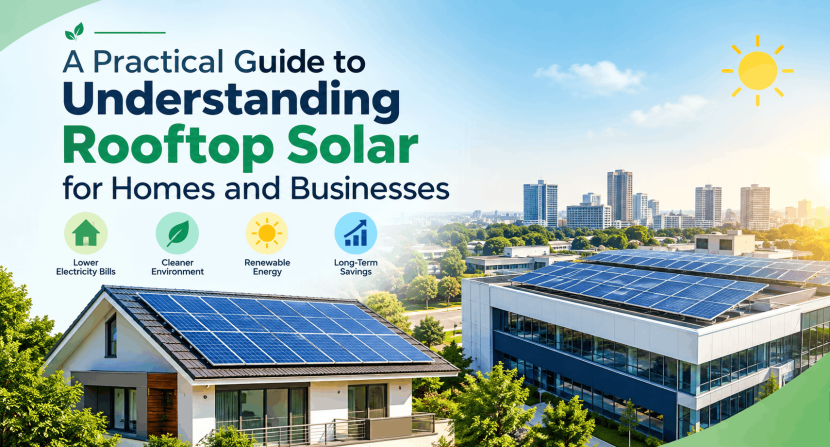
Solar power has become an increasingly familiar part of the energy landscape. Homeowners, businesses, offices, institutions, and other property owners are exploring rooftop solar as a way to generate electricity on-site and make better use of available roof space.
However, understanding whether solar is suitable for a particular property requires more than looking at the number of panels that can fit on a roof. Electricity consumption, roof conditions, system capacity, equipment, installation requirements, and local regulations can all affect the final decision.
Understanding Rooftop Solar
A rooftop solar system generally consists of photovoltaic panels, an inverter, mounting structures, electrical protection equipment, wiring, and monitoring components.
Solar panels generate electricity when sunlight reaches their photovoltaic cells. The electricity produced by the panels is DC electricity, which is then converted into AC electricity through an inverter so that it can be used by common electrical appliances.
Depending on the system configuration and applicable electricity regulations, generated electricity may be consumed on-site, stored in batteries, or exported to the grid.
Understanding these basic components can make it easier for property owners to evaluate different solar proposals.
How Much Solar Capacity Do You Need?
Solar capacity should generally be considered in relation to electricity consumption rather than simply the size of a property.
Two houses with similar floor areas can have very different electricity requirements. One household might use a limited number of appliances, while another may regularly operate air conditioners, refrigerators, water pumps, water heaters, and other high-consumption equipment.
Reviewing electricity bills from previous months can therefore provide useful information before deciding on system capacity.
A solar load calculator can also be used as an initial way to understand electricity requirements and estimate a possible solar system size.
The final system design should still take into account site conditions and the technical characteristics of the property.
Factors to Consider Before Installing Solar
Before installing a rooftop solar system, several practical factors should be assessed.
Roof Space
The available roof area determines how many panels can potentially be installed. However, the entire roof may not necessarily be usable because of structures, water tanks, equipment, pathways, and other obstructions.
Shading
Shadows from trees, neighboring buildings, walls, or rooftop structures can affect solar generation. A proper site assessment can help identify areas that may receive insufficient sunlight.
Roof Condition
The existing condition of the roof is also important. Since a solar system can remain in place for many years, the roof should be assessed before installation.
Electricity Consumption
Understanding when and how electricity is consumed can help determine whether a particular solar configuration is appropriate.
Electrical Infrastructure
The property's existing electrical infrastructure and connection requirements may influence the system design and installation process.
Residential Solar Considerations
For residential properties, solar can be considered as part of a longer-term household energy strategy.
Homeowners can begin by reviewing their electricity consumption and identifying the appliances that contribute most significantly to their electricity usage.
It is also useful to consider future changes. For example, electricity consumption may increase if a household plans to add air conditioning, an electric vehicle, additional appliances, or other electrical equipment.
Information about residential solar solutions in Delhi can provide additional context for homeowners researching the factors involved in residential rooftop solar.
Commercial Solar Requires Additional Planning
Commercial properties can have significantly different electricity requirements from residential buildings.
Offices, warehouses, shops, factories, schools, hospitals, and other commercial facilities may consume electricity throughout the working day. In some cases, their daytime consumption patterns can be relevant when evaluating rooftop solar.
Commercial installations can also involve additional considerations such as:
- Existing electrical load
- Operating hours
- Available roof area
- Structural requirements
- Electrical connection
- Transformer capacity
- Equipment placement
- Safety requirements
- Future electricity demand
For businesses evaluating these considerations, commercial solar panel installation in Gurugram provides an example of the planning involved in commercial rooftop solar projects.
Choosing Solar Equipment
The quality and specifications of the equipment are important parts of a solar installation.
Solar Panels
Solar panels differ in efficiency, physical dimensions, technology, warranty terms, and other characteristics. Comparing these factors can be more useful than simply comparing the number of panels.
Inverters
The inverter converts DC electricity from the solar panels into AC electricity that can be used by electrical equipment. Its capacity and technical specifications should correspond with the overall system design.
Mounting Structures
Mounting structures hold the panels in position and need to be suitable for the roof type and local environmental conditions.
Protection Equipment
Electrical protection equipment is an important part of a properly designed solar installation and can help address electrical safety requirements.
Monitoring
Monitoring systems can provide information about solar generation and system performance, depending on the equipment installed.
Why Installation Quality Matters
Solar equipment can perform differently depending on installation conditions. Panel orientation, tilt, shading, wiring, mounting, ventilation, and electrical connections can all influence the operation of a system.
A site assessment before installation can help identify potential problems.
Installation planning should also consider future maintenance. Panels and other components need to remain accessible for inspection, cleaning, repairs, and other maintenance requirements.
For property owners researching projects in the Delhi-NCR region, information about solar installation in Gurugram can offer additional background on the practical aspects of rooftop solar installation.
Comparing Solar Proposals
When comparing different solar proposals, looking only at the total price can leave out important information.
A useful comparison can include:
- Proposed system capacity
- Expected electricity generation
- Panel specifications
- Inverter specifications
- Mounting structure
- Protection equipment
- Installation scope
- Warranty terms
- Monitoring arrangements
- Maintenance requirements
Expected generation should also be understood as an estimate rather than a fixed number. Actual production can vary depending on sunlight, weather, shading, equipment performance, system design, and other site-specific factors.
Understanding the Long-Term Perspective
A rooftop solar system is generally intended to operate for many years. This makes the initial design and installation important considerations.
Property owners may therefore want to look beyond the initial installation price and consider the expected operating requirements of the system.
Equipment warranties, installation quality, maintenance arrangements, replacement requirements, and future electricity consumption can all become relevant over the life of a solar installation.
Final Thoughts
Rooftop solar can be considered by both residential and commercial property owners looking for an on-site electricity generation option.
The appropriate system depends on the individual property. Electricity consumption, roof space, shading, electrical infrastructure, equipment selection, installation conditions, and local requirements all play a role.
Rather than approaching solar as simply a purchase of panels, it can be useful to look at the complete system and understand how its different components work together.
With accurate electricity-consumption information, a suitable site assessment, and careful comparison of system specifications, property owners can develop a clearer understanding of whether rooftop solar is appropriate for their particular needs.
Disclaimer
Retizen adalah Blog Republika Netizen untuk menyampaikan gagasan, informasi, dan pemikiran terkait berbagai hal. Semua pengisi Blog Retizen atau Retizener bertanggung jawab penuh atas isi, foto, gambar, video, dan grafik yang dibuat dan dipublished di Blog Retizen. Retizener dalam menulis konten harus memenuhi kaidah dan hukum yang berlaku (UU Pers, UU ITE, dan KUHP). Konten yang ditulis juga harus memenuhi prinsip Jurnalistik meliputi faktual, valid, verifikasi, cek dan ricek serta kredibel.