 Laxmikant Mishra
How Cloud Platforms Balance Workloads Between Different Servers
Eduaksi | 2026-05-26 16:43:19
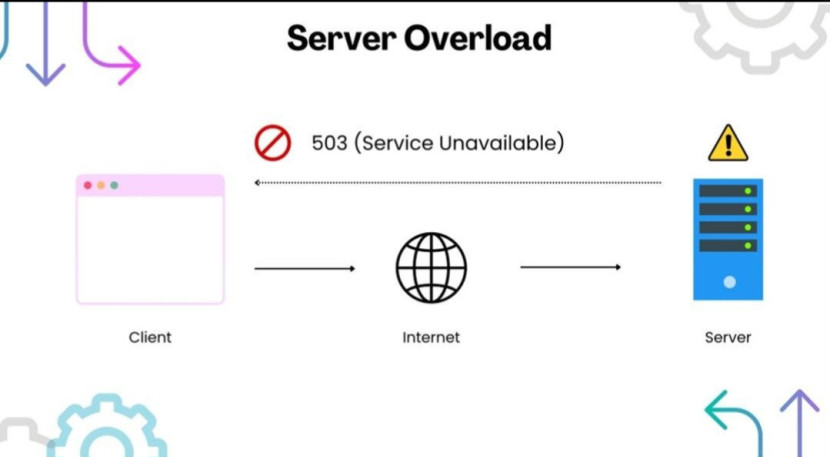
A lot of tasks need to be performed by cloud systems at any given moment in time. Applications, web pages, payments online, video conferencing, and business apps—all of it runs on cloud servers. If all users try to access their services from just one server, then it will be overloaded and even crash. To prevent this situation, cloud platforms distribute the load among several servers. Such a technique is known as workload balancing. It ensures that applications remain fast and reliable. That is why workload management has become an important subject of Cloud Computing Training courses.
What Happens Inside a Cloud Platform?
Anytime a user starts an application or visits a web page, a request is sent to the cloud provider. Before reaching the server where the request has been sent, the load balancer identifies a server that either is not used at the moment or is less congested.
There are several things considered behind the scenes, such as:
● Processor usage
● Memory usage
● Number of active users
● Condition of the server
● Traffic on the network
In case of congestion, requests are switched to another server within seconds.
Students learning cloud infrastructure in a Cloud Computing Certification Course usually study how these balancing systems help companies avoid downtime and slow performance.
Main Technologies Used in Workload Balancing
Different tools work together inside cloud platforms to manage workloads properly.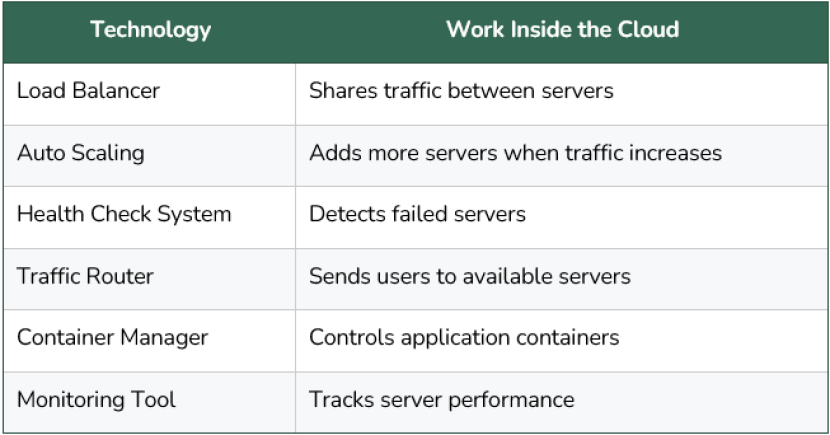
These systems work together all the time to keep applications running smoothly.
A practical Microsoft Azure Online Course normally explains how Azure balancing tools distribute traffic across cloud servers and regions.
How Do Cloud Platforms Choose Servers?
The cloud systems never transfer data randomly. These systems use some strategies to determine which server will take care of the next request.
The commonly used strategies include:
● Round Robin distributes data sequentially to different servers.
● Least Connection transfers data to the server, which has fewer users.
● Weighted Load Balancing directs more traffic to powerful servers.
● Latency-based load balancing selects the most responsive server.
In addition, modern cloud computing systems constantly evaluate the performance of the servers. In case any server slows down, it gets less traffic.
This backend process is now a major part of cloud computing training because companies want stable applications with better performance.
Why Are Containers Important?
Earlier, most cloud systems mainly used virtual machines. Now many companies use containers because they are smaller and faster.
Such systems use containers managed by platforms like Kubernetes. It constantly monitors:
● CPU usage
● Memory usage
● Application status
● Problems with restarts
● Network bandwidth
If the system detects that one machine is too busy, containers will migrate to another server automatically.
Today, container management is an important topic in a cloud computing certification course because most modern cloud applications use container technology.
Smart Scaling in Modern Cloud Systems
Modern cloud solutions are capable of forecasting traffic spikes even before they occur. This technique is known as predictive scaling.
The process involves analyzing:
● Past traffic trends
● User activity
● API calls
● Server load
● Peak times
With such information, additional server capacity is automatically provisioned before traffic becomes too high. This minimizes performance issues at peak periods. Many learners join a Microsoft Azure online course to understand how smart scaling and monitoring work in real cloud environments.
Internal Traffic Between Cloud Services
Many large-scale cloud services are actually broken down into many small services. These small services continue communicating among themselves all the time. Cloud platform providers also need to manage the communication traffic inside the network.
This function is performed using service mesh technology. If one of the services breaks down, the communication channel automatically shifts to another functioning service.
Additionally, cloud monitoring systems monitor:
● Error ratio
● Latency
● Network issues
● Service availability
● Packet loss
The mentioned parameters are critical to the operation of cloud platforms and their applications.
Summary
● Cloud workload balancing involves dividing traffic between different servers.
● A load balancer prevents a server from being overloaded.
● Auto-scaling provides for additional servers during busy hours.
● Containers allow cloud platforms to be efficient and scalable.
● Server monitoring allows tracking of server performance.
● Predictive scaling enables preparation by cloud systems in advance to increase traffic.
Conclusion
Cloud workload balancing is one of the key components of cloud computing. This technology keeps application performance optimal, smooth, and reliable. Today, cloud platforms employ tools such as load balancers, monitoring systems, auto-scaling solutions, and containers to balance workloads between servers in real time. Moreover, as more organizations adopt cloud applications, workload balancing becomes increasingly critical. Taking an online course at Microsoft Azure can help to learn more about how cloud platforms manage traffic flow and keep performance smooth without causing any issues to end users.
Disclaimer
Retizen adalah Blog Republika Netizen untuk menyampaikan gagasan, informasi, dan pemikiran terkait berbagai hal. Semua pengisi Blog Retizen atau Retizener bertanggung jawab penuh atas isi, foto, gambar, video, dan grafik yang dibuat dan dipublished di Blog Retizen. Retizener dalam menulis konten harus memenuhi kaidah dan hukum yang berlaku (UU Pers, UU ITE, dan KUHP). Konten yang ditulis juga harus memenuhi prinsip Jurnalistik meliputi faktual, valid, verifikasi, cek dan ricek serta kredibel.