 Aurin Ordelia
Orientalism and Colonial Violence in Disney's Aladdin (1992)
Politik | 2026-06-30 19:58:35Edward Said's theory of Orientalism and Frantz Fanon's theory of colonialism help explain how popular culture can reproduce colonial ideas. Although Disney's Aladdin (1992) is often seen as a family movie, it also presents images of the East that reflect unequal power relations. This essay argues that the film operates through three colonial mechanisms: it exoticizes the East, constructs Western values as superior, and normalizes stereotypes that influence how audiences understand Middle Eastern societies.
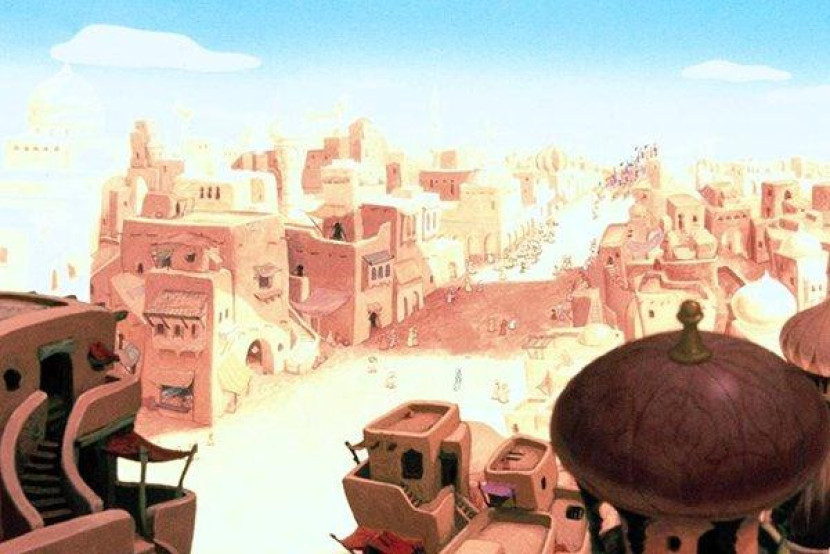
One colonial mechanism is the exoticization of the East. Said (1978) explains that Orientalism presents Eastern societies as mysterious, irrational, and different from the modern West. In Aladdin (1992), Agrabah is introduced as a place of endless deserts, magic, danger, and strange customs. The opening song even describes the city as "barbaric," although this lyric was later changed after receiving criticism. These images encourage audiences to associate the Middle East with fantasy instead of reality. The culture becomes entertainment rather than something to be understood.
Another mechanism is the construction of Western values as the standard of civilization. Fanon (1961) argues that colonialism creates a world where the colonizer represents reason and progress while the colonized is portrayed as backward. Although the story takes place in the Middle East, the main characters, especially Aladdin and Jasmine, speak with American accents and display values that are familiar to Western audiences. In contrast, many background characters and villains are given exaggerated accents and portrayed as aggressive or dishonest. This difference suggests that characters become more acceptable when they appear closer to Western ideals.
A final mechanism is the normalization of stereotypes. Said (1978) argues that repeated representations eventually become accepted as truth. Because Aladdin has been watched by millions of people around the world, its images contribute to public perceptions of Arab culture. Many viewers have little direct knowledge of the Middle East, so films like this may become their primary source of information. As a result, fictional stereotypes can influence real attitudes toward people and cultures.
In conclusion, Aladdin (1992) demonstrates how Orientalism and colonial ideology continue to exist in popular media. Said's theory explains how the East is represented through simplified stereotypes, while Fanon's theory shows how these representations support unequal power relations between cultures. Personally, I believe films are never completely neutral because they shape the way audiences think about other societies. Entertainment should not only be enjoyable but also encourage respect for cultural diversity instead of repeating colonial stereotypes.
References
Fanon, F. (1961). The Wretched of the Earth. Grove Press.
Said, E. W. (1978). Orientalism. Pantheon Books.
Disclaimer
Retizen adalah Blog Republika Netizen untuk menyampaikan gagasan, informasi, dan pemikiran terkait berbagai hal. Semua pengisi Blog Retizen atau Retizener bertanggung jawab penuh atas isi, foto, gambar, video, dan grafik yang dibuat dan dipublished di Blog Retizen. Retizener dalam menulis konten harus memenuhi kaidah dan hukum yang berlaku (UU Pers, UU ITE, dan KUHP). Konten yang ditulis juga harus memenuhi prinsip Jurnalistik meliputi faktual, valid, verifikasi, cek dan ricek serta kredibel.